
Visit Sri Lanka
Welcome to Sri Lanka
the pearl of the Indian Ocean
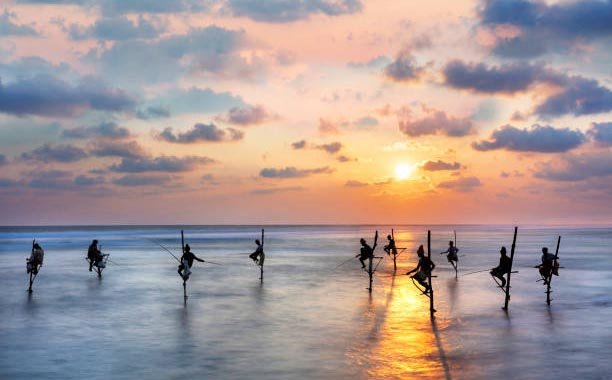
An Island country in the Indian Ocean. Since 1948 Ceylon has been an independent country and a member of the British Commonwealth of Nations. It is a pear-shaped island, situated off the southern tip of India near the Equator. Several Islands and Adam’s Bridge, a 32km chain of reefs, are between Ceylon and India. With an area of 65,610 square kilometers. Ceylon is slightly larger than West Virginia. Greatest dimensions are about 435km north-south and 225km east-west.
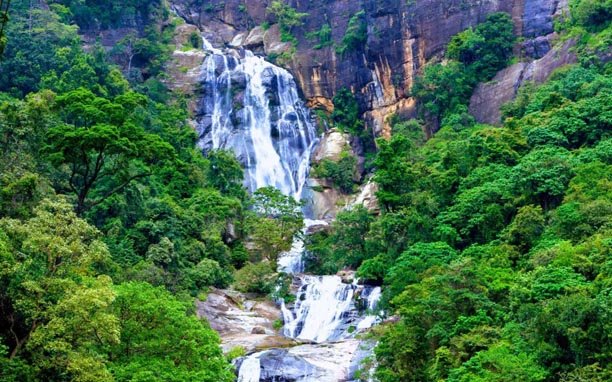
A plain barely above sea level makes up the northern half of the island and continues around the coast of the southern half. South-central Ceylon, in contrast, is hilly and mountainous, reaching elevations of more than 8,000 feet ( 2,400m ) above sea level. The highest peak is Pidurutalagala, which rises to 8,281 feet. From the mountains flow most of Ceylon’s numerous but short rivers. Several of them provide irrigation water and hydroelectric power.
The low land areas are tropically hot and humid, while the mountains are marked by cooler, less sultry, and considerably rainier weather. Average temperatures vary from about 80F (27C) along the coast to 60F (16C) high in the mountains. Throughout the year there is very little seasonal or daily variation. Rainfall ranges from about 50inches (1,270mm) a year in parts of the north to about 200inches (5,080mm) in the southwest, the distribution being determined largely by the monsoons and the island’s physical features.
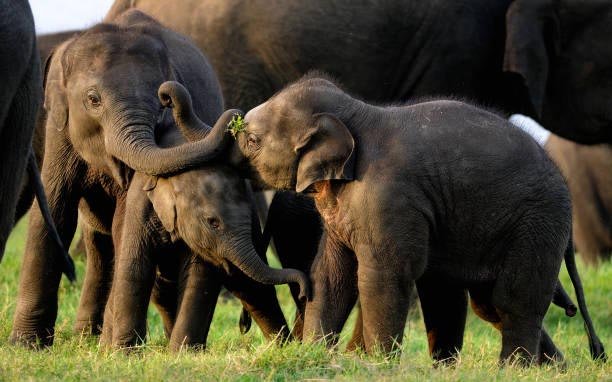
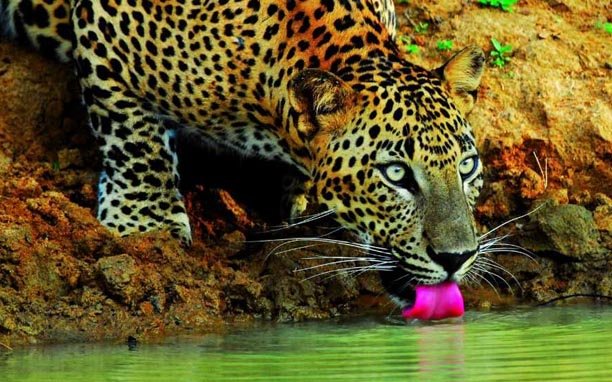
Tropical forests of varying kinds cover Ceylon’s mountainsides. Tree-studded grass-lands prevail on the drier foothills and plains. Among the many trees are stain wood, ebony, teak and jak. Though diminishing in number, large animals are still found wild in Ceylon. They include elephants , leopards, water buffalo, bears, deer and boars. There are also monkeys of several species and a large variety of birds and reptiles, including pythons, vipers and cobras.